





USE CASES
Real-time Communication Improves Telehealth Services
- Online Consultations
- Online Video Diagnostics
- Webinars
- Remote Expert Guidance

Real time online personal health consultation via audio and video
- General Consultations
- Nutrition Advice
- Mental Health Sessions
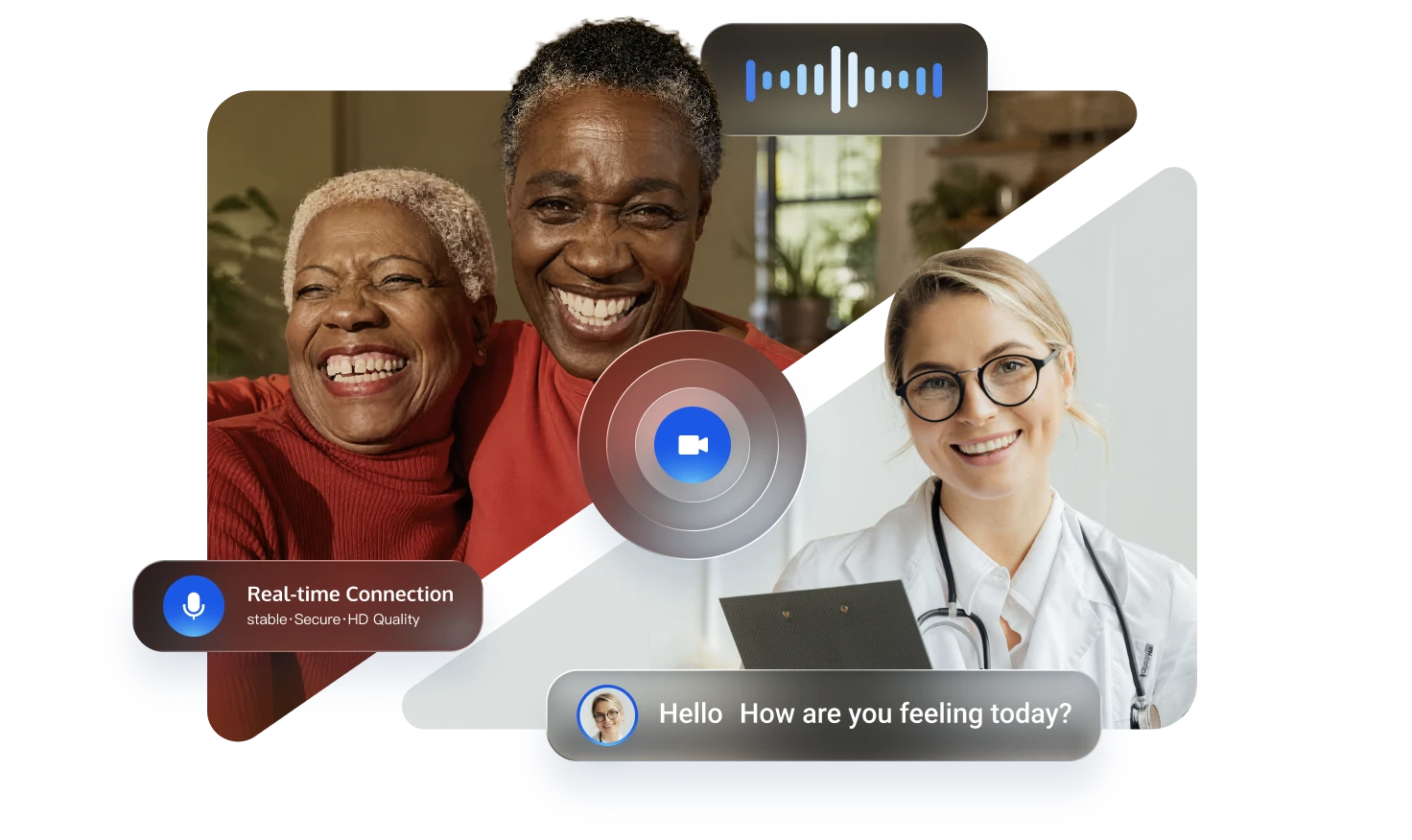
Patients can virtually connect with healthcare providers for consultations through our platform, using high-quality video and voice calls. Our service facilitates the discussion of health issues, diagnosis, and treatment planning, ensuring privacy and convenience.

Facilitate accurate and comprehensive telehealth diagnoses
- Specialist Consultations
- Second Opinions
- Remote Diagnostics
Our platform enables healthcare professionals to conduct thorough remote diagnostics. With high-definition video streaming, medical practitioners can examine patients, discuss symptoms, and provide real-time visual assessments, enhancing the accuracy of remote diagnoses.

Conduct educational healthcare webinars and workshops
- Medical Training
- Public Health Awareness
- Specialist Lectures
Healthcare professionals can host and stream educational webinars and workshops using our platform. It allows for interactive sessions with large audiences, including features like Q&A, screen sharing, and real-time feedback, making it ideal for medical training programs.

Leverage advanced call functionalities to implement real-time telehealth consultations
- Medical Cooperation
- Expert Diagnosis
- Remote Surgical Assistance
Integrates high-definition video and audio calls with secure chat for comprehensive expert consultations. Medical professionals can share images, reports, and engage in detailed discussions, ensuring an effective diagnostic process.
Why Build Telemedicine Apps?
Expand Healthcare Access
Telemedicine apps bridge geographical gaps, offering healthcare services to remote or underserved regions. They enable providers to see more patients in less time, thereby alleviating strain on healthcare systems.

Cost Reduction
Enhance Patient Engagement
Improve Healthcare Quality
PRODUCTS
Why Choose Tencent RTC Telemedicine Solutions?

Call
Low-latency audio and video ensure clarity during medical consultations
Our telemedicine API delivers high-fidelity audio and high-resolution video, ensuring that conversations during healthcare consultations are clear and images are vivid. With AI-based noise reduction technology and advanced video encoding algorithms, we provide seamless and immersive audiovisual experiences through our telemedicine API.
Room
Comprehensive features enhance medical interaction and workflow
With features like screen sharing and recording playback, healthcare providers can replicate the in-person consultation experience virtually, fostering meaningful patient-provider interactions and ensuring comprehensive care delivery.


All Products
Flexible customization adapts to diverse medical applications
Our API offers SDKs for web, mobile, and desktop platforms, along with various UIKits, allowing developers to customize applications according to their specific requirements and branding preferences. This level of customization empowers healthcare organizations to tailor healthcare solutions that align with their unique workflows and patient needs.
Telemedicine FAQs
What is telemedicine software?
Telemedicine software refers to digital platforms designed to facilitate remote medical consultations and healthcare services. It enables patients to connect with healthcare providers virtually, allowing making video calls and messaging for remote diagnosis, telemonitoring, teletherapy, and more. Telemedicine software improves healthcare access, offering convenient support to remote populations via smartphones, tablets, or computers, reducing the need for in-person visits.
What are telemedicine types?
Telemedicine includes a variety of methods for remote healthcare delivery, with the most common types of telehealth services being:
1. Real-time Virtual Visits: This service involves live interactions between patients and healthcare providers through video conferencing, allowing for immediate consultations and treatments without physical presence.
2. Store-and-forward Consultations: This refers to asynchronously sharing medical data, images, or test results for later review and diagnosis by healthcare providers.
3. Remote Patient Monitoring: Telehealth monitoring involves remote tracking of vital signs and health data with digital devices for ongoing health management.
Why do people use telemedicine?
Telemedicine offers various benefits:
1. Accessibility: Telemedicine provides access to healthcare services for individuals in remote or underserved areas, overcoming geographical barriers.
2. Convenience: It offers convenient access to healthcare from the comfort of one's home or workplace, eliminating the need for travel and reducing wait times.
3. Timeliness: Telemedicine enables timely consultations and interventions, facilitating prompt medical attention and reducing the risk of delayed treatment.
4. Cost-effectiveness: It can lower healthcare costs by minimizing travel expenses, reducing hospital admissions, and optimizing resource utilization.
5. Continuity of Care: Telemedicine ensures ongoing healthcare access, crucial in emergencies or pandemics, for sustained patient safety and well-being.
How do APIs facilitate Telehealth services?
APIs play a pivotal role in facilitating telehealth services by enabling various functionalities:
1. Remote Consultations: APIs integrate video conferencing and messaging features, allowing patients to engage in remote consultations with healthcare providers, exchanging medical records and images for prompt diagnoses.
2. Data Sharing: APIs facilitate the secure exchange of medical records, images, and test results between healthcare systems, enabling seamless information sharing and collaboration among providers.
3. Appointment Scheduling: APIs enable patients to schedule appointments and receive reminders through telehealth platforms, streamlining the scheduling process.
4. Group Consultations: Through APIs, telehealth platforms support group consultations, enabling physicians to collaborate with remote medical experts in diagnosing patients and devising treatment plans via high-definition video calls.
5. Remote Medical Education: APIs facilitate online healthcare training for medical staff through audio and video calls, as well as interactive live streaming sessions.
6. Video-Based First Aid: APIs facilitate remote first aid guidance by allowing doctors to remotely assess patients' conditions and access medical records through audio/video calls, providing timely assistance in emergencies.


